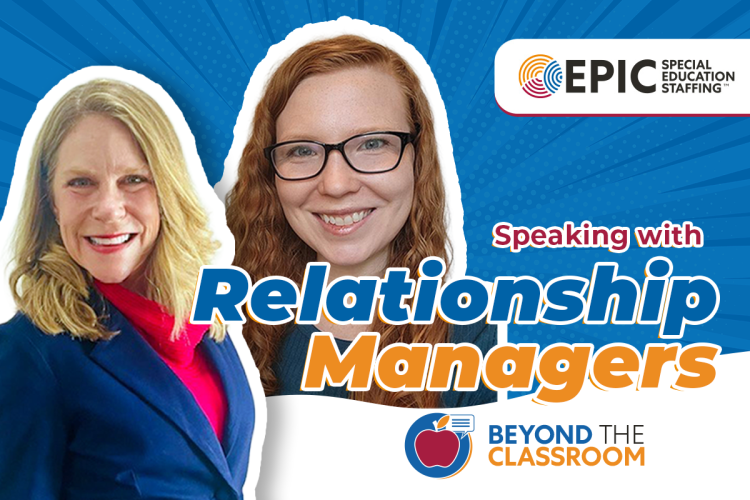




By Heather Melancon (Clinical Services Manager) & Layla Wohlfeiler (Clinical Services Manager)
Across schools today, educators are seeing an increase in student anxiety, dysregulation, and diverse learning needs. At the same time, conversations about inclusion, trauma-informed care, and student voices are becoming more prominent.
Simultaneously, many school districts are being asked to implement these approaches while navigating staffing shortages, inconsistent support, and increasing classroom complexity, making sustainable implementation more difficult.
District leaders and school teams are asking:
- What does it truly mean to support neurodivergent students in a way that works in real classrooms?
- How do we balance high expectations with the realities educators face every day?
- How do we create environments where students feel safe enough to engage and learn consistently?
This is where neurodiversity-affirming practice enters the conversation.
It’s not a trend. It is not lowering expectations. It’s not abandoning structure or accountability.
It is a shift in mindset, one that changes how school teams understand students, design supports, and work together across disciplines.
And for many districts, it is becoming a necessary part of building sustainable, effective special education programs.
For schools, the challenge is having the right team, training, and ongoing support to implement these practices consistently across classrooms.
What Is Neurodiversity?
Neurodiversity is the understanding that human brains naturally vary. Some students are autistic. Some have ADHD. While some have learning disabilities, communication differences, or sensory processing differences.
These are not “broken” brains. They are brains that require informed, responsive support.
Research in the field of autism and disability studies emphasizes that neurological differences are part of natural human variation, not simply deficits to eliminate (Den Houting, 2019; Botha et al., 2022).
In school settings, this reframes a core question.
Instead of asking:
“How do we make this student act more typical?”
Teams begin asking:
“How do we understand this student and build supports that help them thrive?”
That shift leads to more effective interventions, stronger relationships, and more consistent student engagement.
Moving From Compliance to Connection
Many school systems have historically emphasized compliance: quiet bodies, eye contact, hands still, work completed exactly as instructed.
Structure matters. Clear expectations matter.
But compliance alone does not lead to skill development or long-term success.
Students can comply and still be:
- Anxious
- Overwhelmed
- Masking distress
- Unable to communicate needs
Neurodiversity-affirming practice prioritizes connection as a foundation for instruction.
When school teams focus on connection, they:
- Recognize behavior as communication.
- Support regulation before academic demand.
- Teach self-advocacy and independence skills.
Research shows that strong adult–student relationships significantly improve behavioral and academic outcomes (Pianta et al., 2012). In practice, this means students are more available for learning, and educators spend less time managing escalations.
For schools, this shift also supports staff retention. When educators have the tools and support to understand behavior, the work becomes more sustainable and rewarding.
Without that support or shift, however, educators are often left managing complex behaviors without the resources or collaboration needed, contributing to burnout and turnover.
How This Aligns with Trauma-Informed Care
Trauma-informed care emphasizes safety, predictability, empowerment, and choice (SAMHSA, 2014).
Many neurodivergent students experience:
- Chronic sensory overwhelm
- Social misunderstanding
- Increased anxiety
- Higher exposure to adverse experiences
When environments are unpredictable or overly controlling, stress responses increase. According to polyvagal theory (Porges, 2011), a dysregulated nervous system prioritizes survival over learning.
Neurodiversity-affirming practices align with trauma-informed approaches because they:
- Reduce power struggles
- Increase predictability
- Offer structured choices
- Validate communication attempts
- Emphasize co-regulation
For school districts, this alignment matters. It creates consistency across classrooms, services, and support staff, which is critical for both student outcomes and program stability.
What Neurodiversity-Affirming Practices Look Like in Real Schools
This shift is not theoretical. It shows up in daily decisions, classroom design, and team collaboration.
1. Predictable, Transparent Routines
Clear schedules, consistent transitions, and visual supports reduce anxiety and increase independence. Research supports structured teaching and visual schedules as effective supports for autistic students (Hume et al., 2014).
In practice, this might include:
- Visual daily agendas
- Countdown timers for transitions
- Explicit teaching of routines
Predictability builds confidence and supports both students and staff by reducing uncertainty and behavioral escalation.
2. Sensory-Supportive Environments
Some students experience sensory input in ways that can be dysregulating. For example, fluorescent lights may feel painful, background noise overwhelming, or crowded spaces distressing.
Sensory-supportive classrooms may include:
- Noise-reducing headphones
- Flexible seating
- Designated calm-down or regulation spaces
- Built-in movement opportunities
Research shows that sensory challenges are strongly associated with school participation difficulties (Ashburner et al., 2008).
Supporting sensory needs is not “giving in.” It is creating equitable access to learning.
For schools, these adjustments are often low-cost but high-return, improving access to instruction without requiring intensive intervention.
3. Visual and Communication Supports
Visual supports reduce cognitive load and increase independence (Dettmer et al., 2000). Augmentative and alternative communication (AAC) increases participation and expressive language outcomes (ASHA, 2023).
In schools, this may look like:
- First–Then boards
- Visual checklists
- Communication devices or picture systems
- Staff responding consistently to all communication forms
When communication improves, many behavioral challenges decrease, allowing teams to focus on instruction rather than crisis response.
4. Collaborative, Multidisciplinary Teams
Neurodiversity-affirming practice thrives in collaboration.
Special education teachers bring classroom expertise. Paraprofessionals provide daily relational support. SLPs ensure communication access. School psychologists and social workers address emotional needs. Behavior specialists contribute to assessment and intervention design.
When these roles operate in silos, support becomes inconsistent. But when they operate as a coordinated team, outcomes improve.
Research supports interdisciplinary collaboration as critical for effective school-based supports (Trembath et al., 2020).
This is where many districts face challenges. Staffing gaps, inconsistent coverage, or limited access to specialized expertise can make it difficult to sustain this level of collaboration. In practice, this often means schools understand what needs to happen but lack the capacity to execute it consistently across classrooms and student populations.
High-touch staffing partnerships that understand school environments can help fill those gaps, ensuring teams are not just staffed but supported throughout the school year. This kind of support goes beyond filling roles. It helps ensure alignment across teams, continuity for students, and a more sustainable model for educators.
Why This Conversation Matters Now
Schools are navigating:
- Increased student mental health needs
- Educator burnout
- Rising behavioral referrals
- Greater awareness of disability rights and inclusion
At the same time, districts are being asked to do more with limited resources and hard-to-fill roles.
Students today are navigating complex social and sensory environments. Many are telling us, in words or behavior, that traditional approaches are not always meeting their needs.
This creates a gap between what schools know is best practice and what they are realistically able to implement day-to-day.
Neurodiversity-affirming practice invites us to pause and ask:
- Are we reducing behavior, or teaching skills?
- Are we enforcing compliance, or building capacity?
- Are we prioritizing control, or cultivating connection?
This conversation matters because students deserve environments that recognize their humanity, not just their performance.
Neurodiversity-Affirming Practices: A Shift Toward Better Support
Neurodiversity-affirming practice does not lower expectations. It changes how schools help students reach them.
It calls for systems that:
- Protect dignity
- Promote autonomy
- Support communication
- Align with trauma-informed practices
- Strengthen collaboration across teams
For districts, success depends on more than strategy. It depends on having partners who understand the realities of school-based work and can support both students and the professionals serving them throughout the year. That includes ensuring clinicians are not only placed, but supported with the tools, collaboration, and guidance needed to implement these approaches effectively.
When schools move toward connection, clarity, and collaboration, they build environments where both students and educators can succeed.
Neurodiversity-affirming practices are most effective when school teams are fully supported and aligned. Epic Special Education Staffing partners with school districts and special education professionals to provide consistent, high-touch support that extends across the full school year, helping both students and staff succeed.
About Heather

Heather Melancon, M.S.Ed., BCBA, is a Clinical Services Manager at Epic Special Education Staffing with over 15 years of experience supporting students with autism, behavioral, and developmental needs across school, home, and community settings. As a licensed Board Certified Behavior Analyst (BCBA) and teacher, Heather has been a part of district-level behavior teams, building capacity with multidisciplinary teams, developing trauma-informed and evidence-based behavior systems, and providing professional development nationwide. She is passionate about building strong partnerships with schools and families to create sustainable, student-centered solutions.
Outside of her professional life, Heather is a wife, a proud mother, and someone who strives to live a holistic lifestyle. She recharges through hiking, playing sand volleyball, and staying connected to family. Heather brings that same energy and compassion to her work, believing that collaboration, connection, and empathy are key to meaningful student success.
About Layla

Layla Olive Wohlfeiler, M.S., CCC-SLP, is a Clinical Manager with Epic Special Education Staffing. With over 15 years of experience as a Speech-Language Pathologist working in a variety of school, pediatric, and tele-therapy roles, Layla uses her knowledge and extensive background in special education and virtual therapy to support our clinicians.
Layla received her bachelor’s degree in Speech and Hearing Sciences from The Ohio State University and a master’s degree in Communication Disorders from Marshall University. Her academic background and practical experiences have equipped her with the skills and expertise to effectively support and mentor clinicians in their professional journeys. She loves to collaborate and brainstorm with clinicians to ensure their success in various placements, providing them with the tools and support they need to thrive. Layla lives in Columbus, Ohio, with her growing family. They enjoy traveling, attending concerts, and passionately supporting “THE” Ohio State Buckeyes.